
Learning to pulp coffee in Waku

Following on from last week's coffee training in Deusa, Hari Kumar Kharki, our EcoHimal project officer has been in Waku to train 35 farmers on how to use a coffee pulping machine. He sent us these photos from his workshop on Wednesday:

Learning the importance of sifting out any dirt, foliage and unripe coffee cherries from the harvest. The red coffee cherries you can see here were picked the day before, the red fruity layer is actually very tasty to eat - a juicy, coffee flavoured…

Learning the importance of sifting out any dirt, foliage and unripe coffee cherries from the harvest. The red coffee cherries you can see here were picked the day before, the red fruity layer is actually very tasty to eat - a juicy, coffee flavoured snack. 

Next the coffee is fed into a hand turned pulping machine. The beans are stripped of their red fruity skin as they pass through the machine. This was the first time these farmers have ever used a pulping machine. It is easy to underestimate the…

Next the coffee is fed into a hand turned pulping machine. The beans are stripped of their red fruity skin as they pass through the machine. This was the first time these farmers have ever used a pulping machine.

It is easy to underestimate the difference the pulping machines have had. Previously farmers had to pulp by hand. This meant handling each bean individually, a tedious process of peeling the fruit off - one bean at a time. Thanks to these simple pulping machines, a job that used to take a whole afternoon, can now be done in a few minutes. 

After pulping, we are left with 'parchment', this is coffee that has had its skin removed, but still has a thin layer protecting the interior green coffee bean. The parchment is wet, so is left out to dry for a few days to lower its moisture content…

After pulping, we are left with 'parchment', this is coffee that has had its skin removed, but still has a thin layer protecting the interior green coffee bean. The parchment is wet, so is left out to dry for a few days to lower its moisture content. Once dry, the parchment has a hard shell, this protects the green coffee bean inside keeping it fresh for many months if necessary.

This parchment, once dry, will be carried in sacks to Deusa AFRC. Through our partners, EcoHimal, the coffee is then transported to Kathmandu to be sold to coffee traders. From there it will find its way to roasting houses in Australia and New Zealand.   
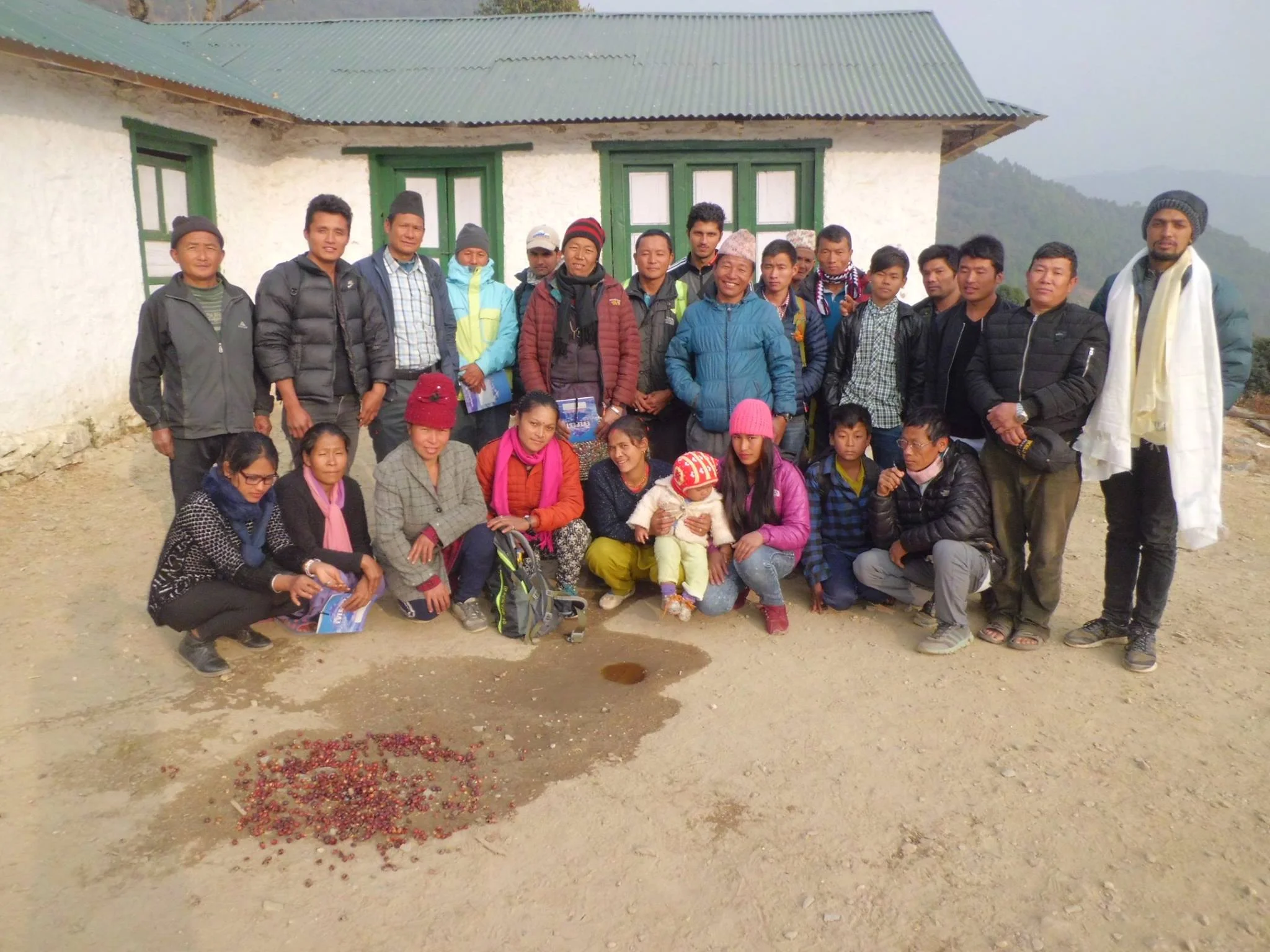
Hari Kumar Kharki (right of picture, wearing white ceremonial scarves) with farmers in Waku, January 31st 2018. 

Hari Kumar Kharki (right of picture, wearing white ceremonial scarves) with farmers in Waku, January 31st 2018. 

How you can help

The pulping machine seen here is one of six that your donations enabled us to buy in 2017. They are shared by farmers who carry them from hamlet to hamlet during the harvest season. They are hand turned, so no need for fuel or electricity and no CO2 emissions. They are also very sturdy and easy to maintain, the farmers love them.

As coffee growing spreads into Waku, we need to provide six more machines. Your donations are vital to this. Each pulping machine costs £360. Make a monthly donation of £30 to buy a coffee pulping machine for Waku.

Coffee harvest under way in Deusa

One of the most exciting developments in Deusa is the growth in coffee production on the lower slopes of the valley. Right now our volunteer, Meleah Moore, is in Deusa with our partners EcoHimal Nepal. There is a lot of activity going on there this week, farmers are getting specialist training on running cooperatives and learning some advanced skills to help them produce coffee more efficiently. The coffee training is practical, they need coffee beans, so it has been timed to coincide with the coffee harvest. Meleah is capturing this and posting updates on our Instagram account. 

Coffee is grown in the shade of other trees like Banana and Moringa, a process called intercropping that farmers are learning in Deusa and Waku thanks to our Agro Forestry education programmes there. The trees help each other, farmers are working with nature, rather than creating boring mono-culture farms that are not sustainable long term. The Banana tree provides vital shade for the coffee plants, but also, thanks to their roots help keep water in the soil. The roots of the coffee help bind the soil and their fallen, rotting leaves provide it with nutrients to keep the soil fertile.

The banana's are also of course delicious and nutritious, the coffee is unbelievable! Through the Deusa AFRC and our partners EcoHimal Nepal, the farmers are able to sell their coffee to traders in Kathmandu. This is providing a great new source of income. The Glacier Trust is currently exploring ways to roast, bag and sell coffee grown in Deusa ourselves. We'll buy it from the farmers, process it, sell it and then reinvest the profits into more Climate Change Adaptation projects. Please get in touch if you'd like to find out more. 

Deusa AFRC board members announced

DeusaAFRC.JPG

The Deusa AFRC (Agro Forestry Resource Centre) has elected a new chair and some new members to its board of governors. There is also a new look to the Advisory committee. Both bodies help to ensure that the AFRC runs in a democratic and transparent way with members of the board and advisory committee providing an essential link to the community. 

Newly Elected Board Members for two year tenure:

  1. Chairperson        Mr. Til Bahadur Rai        
  2. Vice Chair         Mr. Rajesh Babu Rai        
  3. Secretary        Mr. Keshab Prasad Rai        
  4. Joint-Secretary        Mr. Chudamani K.C.         
  5. Treasurer         Ms. Parbati Rai             
  6. Member            Mr. Solahang Rai         
  7. Member             Mr. Nau Bahadur Rai        
  8. Member             Ms. Poornima Rai         
  9. Member             Ms. Maina Kumari Rai     
  10. Member             Mr. Bir Bahadur B.K.     
  11. Member             Ms. Kamala Rai         

Advisory Committee members:

  1. Mr. Kul Krishna K.C. – Coordinator                
  2. Mr. Ram Sangharsha Kirati – Ward Chair - 8     
  3. Mr. Anu Prashanta Rai - Ward Chair -7         
  4. Mr. Bhojraj Karki – Journalist             
  5. Ms. Sarita Rai – Ward member

TGT would like to congratulate and welcome all new members. 

A dedicated home for project news.

In 2017 we ramped up the blog section of our website, bringing you news and views from the world of Climate Change adaptation and our activities here in the UK. As a consequence, the important news from our projects in Nepal was getting lost. We decided that it needs a dedicated section. So here it is, new for 2018: 'Project News'. 

We'll be sharing all the latest from our project work in Nepal right here to keep you up to date. 

IMG_3620.JPG