
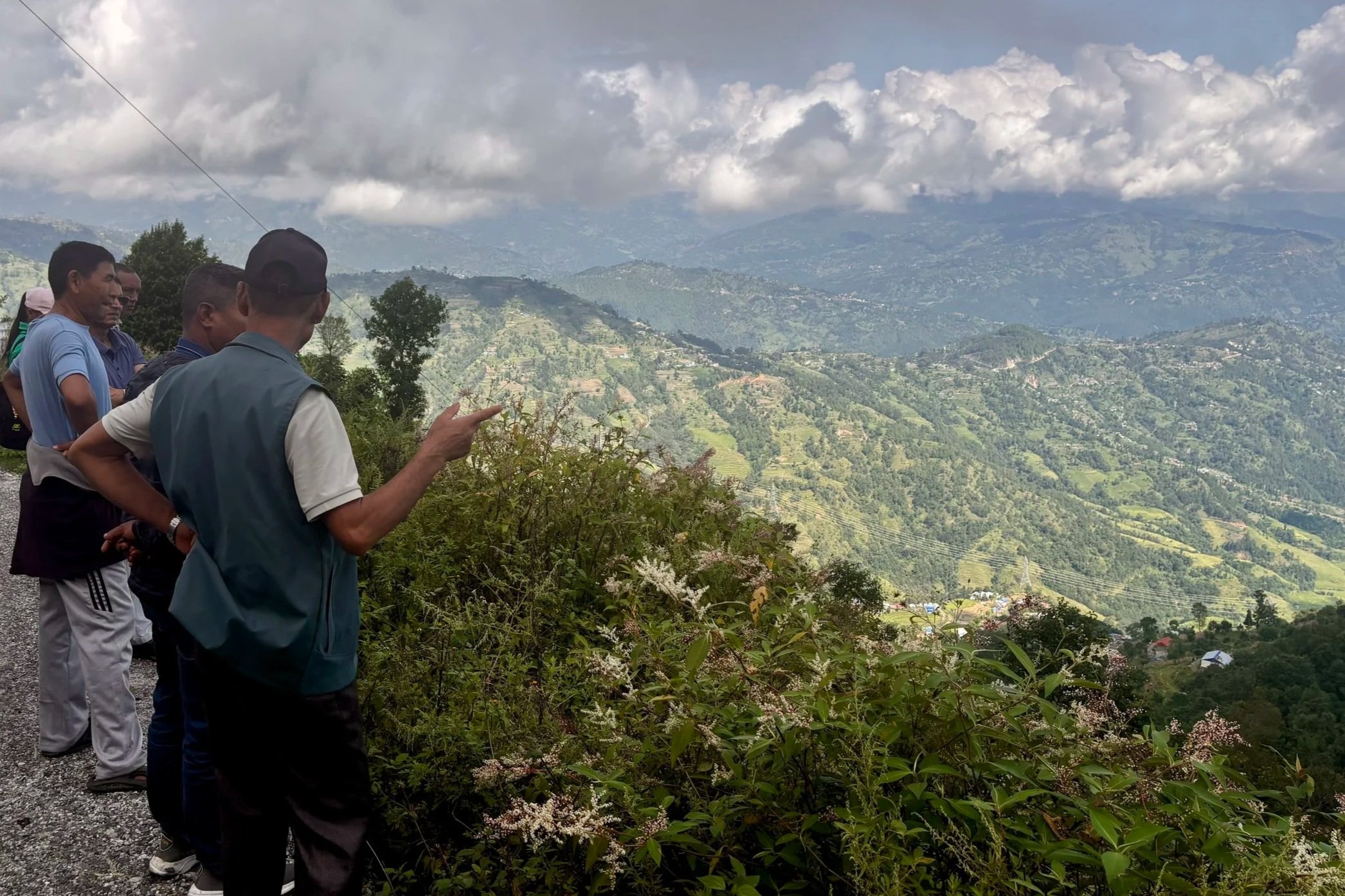

Since 2018, The Glacier Trust and EcoHimal Nepal have been working with the people of Mandan Deupur to build something transformative: a community‑led Agroforestry Resource Centre that helps farmers adapt to climate change, diversify their livelihoods, and restore the health of their land.
What began as a single hub is now evolving into a full “hub and spoke” agroforestry system that will reach hundreds more families across the municipality. Phase III of the project (2025–2027) marks a major step forward - expanding capacity, strengthening local markets, and supporting communities recovering from the devastating September 2024 landslides.
Where is Mandan Deupur?
Mandan Deupur is a rural municipality in Kavrepalanchok District, part of Nepal’s Bagmati Province. It lies in the mid‑hills east of Kathmandu, around 40–50 km from the capital. The landscape is a patchwork of terraced fields, forested slopes, and small villages - beautiful, productive and increasingly vulnerable to climate‑driven hazards such as landslides, erratic rainfall and water scarcity.
Its varied altitudes and microclimates make it an ideal location for agroforestry and its strong community networks provide the foundation for long‑term resilience. This is why Mandan Deupur was chosen as the site for Nepal’s second Agroforestry Resource Centre.
Why organic farming matters in Kavrepalanchok
Kavrepalanchok is one of Nepal’s most agriculturally productive districts, but it is also one of the highest users of chemical pesticides and synthetic fertilisers. Over time, this has created a series of environmental and health challenges:
Soil degradation: Chemical inputs have reduced soil fertility and organic matter, making crops more vulnerable to drought and disease.
Health risks: Farmers often apply pesticides without protective equipment, increasing exposure to harmful chemicals.
Water contamination: Runoff affects local water sources, impacting both people and livestock.
Rising costs: Chemical inputs are expensive, reducing profit margins and creating dependency.
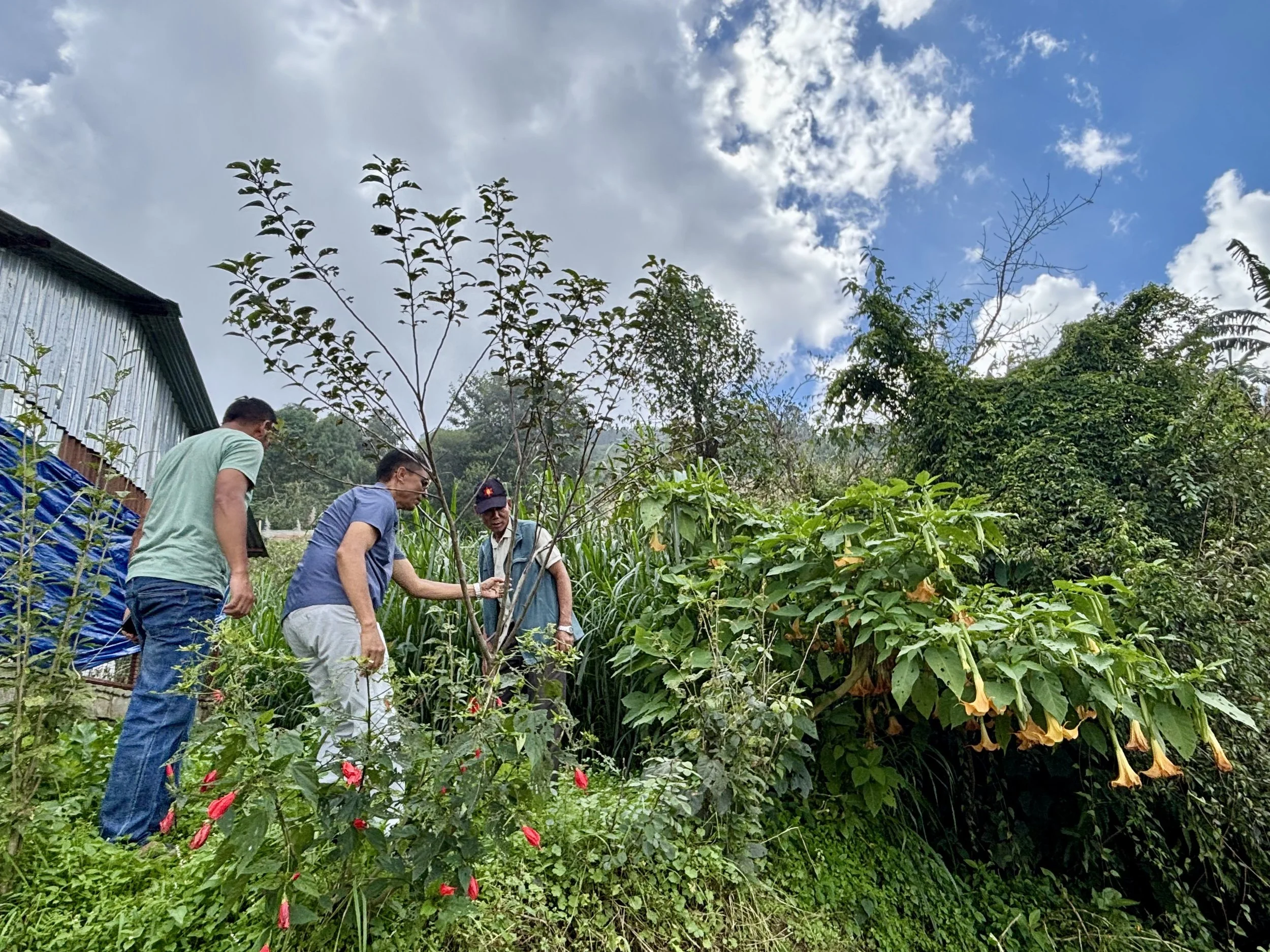
For these reasons, MD‑AFRC places organic farming and agroforestry at the heart of its training and outreach. By helping farmers transition to tree‑based cropping, composting, bio‑fertilisers, and natural pest management, the project supports healthier soils, safer food, and more resilient livelihoods.
The success of organic villages, school gardens, and satellite nurseries in the project so far shows that farmers are ready for this transition, and that demand for organic produce is rising both locally and in nearby markets like Nagarkot.
What the AFRC model delivers
The Agroforestry Resource Centre is more than a building, it is a catalyst for long‑term resilience. The model, first pioneered by The Glacier Trust and EcoHimal in Deusa (Solukhumbu), brings together:
Training and education in climate‑smart agriculture, organic farming and tree‑based cropping
A plant nursery producing high‑value seedlings such as avocado, citrus and macadamia
Innovation and testing plots where new crop varieties and techniques are trialled
A community hub for workshops, farmer field schools and knowledge exchange
Satellite nurseries run by skilled local farmers, extending services into remote villages
Market access support including weekly organic markets and new outlet centres
This integrated approach has already transformed livelihoods in Solukhumbu and Mandan Deupur, along with a network of 10 AFRCs across Nepal, is now following the same path.
Phase III (2025–2027): From hub to hub‑and‑spoke
Over the next three years, MD‑AFRC will focus on four major goals:
Support families affected by the 2024 landslides - More than 400 households lost crops, land, and income. The project will help them rebuild through targeted training, seedlings, and livelihood rehabilitation.
Achieve full financial self‑sufficiency - By January 2028, MD‑AFRC and all six satellite nurseries aim to cover their own operating costs through seedling sales, training services, and organic produce markets.
Expand the hub‑and‑spoke system - Six satellite nurseries (three existing, three new) will serve as hyper‑local centres for seedling production, training, and innovation, reaching over 500 new families.
Strengthen local markets for organic produce - Two outlet centres (MD‑AFRC and Nagarkot) will help farmers sell vegetables, fruits, and seedlings at fair prices, while promoting healthy, chemical‑free food.
What has already been achieved
Previous work has laid a powerful foundation:
6,083 farmers trained in climate‑smart agriculture
82,118 tree seedlings planted, with a 75% survival rate
103 polyhouses built for off‑season vegetable production
12 school agroforestry gardens established
Satellite nurseries produced 46,896 seedlings and 114 tonnes of organic vegetables
77% of surveyed farmers increased their income
Nagarkot Haat Bazaar created a thriving market for local organic produce
These achievements show both the demand for agroforestry and the community’s commitment to long‑term change.
Why this work matters
Agroforestry is one of the most effective climate adaptation strategies for Nepal’s mid‑hills. It:
stabilises slopes and reduces landslide risk
improves soil fertility and water retention
diversifies income through fruit, nuts, and vegetables
reduces reliance on chemical inputs
strengthens food security
builds resilience to climate shocks
MD‑AFRC is helping Mandan Deupur transition from vulnerable subsistence farming to a more sustainable, profitable, and climate‑resilient future.
Looking ahead
With continued support, MD‑AFRC will become a self‑sustaining centre of excellence - a place where farmers learn, innovate and build livelihoods that can withstand the pressures of a changing climate.
The next three years are pivotal. Together with EcoHimal Nepal, local government and the communities of Mandan Deupur, we are building a model of resilience that is being replicated across Nepal.