
In the remote mountain villages of Nawalparasi East, The Glacier Trust and Himalayan Community Development Forum (HICODEF) are pioneering a climate adaptation strategy rooted in organic coffee farming. Building on the success of the five-year Layer Farming for Adaptation Project (LFAP), the current initiative - From Surviving to Thriving (STTP) - is helping communities transition from subsistence farming to sustainable, income-generating agroforestry.
This project supports farmers in Hupsekot and Baudikali Rural Municipalities to cultivate coffee using organic methods, intercropped with vegetables and fruit trees. It strengthens local nurseries, expands market access and empowers community groups to lead their own development.
Where is Nawalparasi?
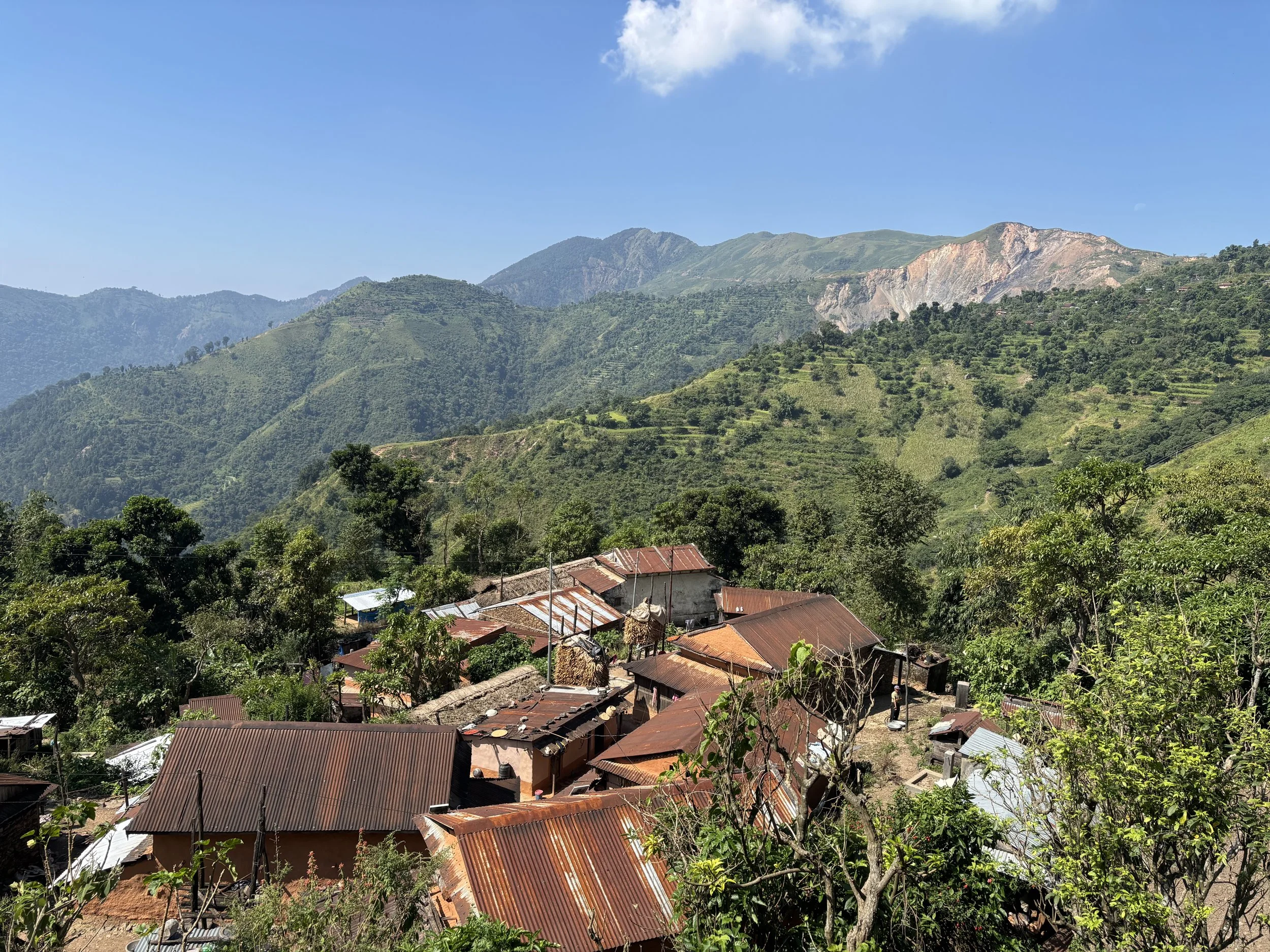
Nawalparasi East lies in Nepal’s Gandaki Province, bordering India to the south. The project area spans eleven villages in the Siwalik foothills - the first rise of the Himalayas above the Terai plains. These villages, including Ripaha, Dhoubadi, Pokhari, Baseni, Dulunga, Charghare, Lahape, Harde, Ramche, Shyamgaha, and Kute, sit between 700 and 1,350 metres above sea level, which is now ideal for high-quality coffee cultivation.
Despite being just 10–30 km from the national highway, these communities are extremely remote. Monsoon rains often render dirt roads impassable for months and most households rely on subsistence farming with limited access to irrigation, markets or agricultural training.
Why coffee farming?
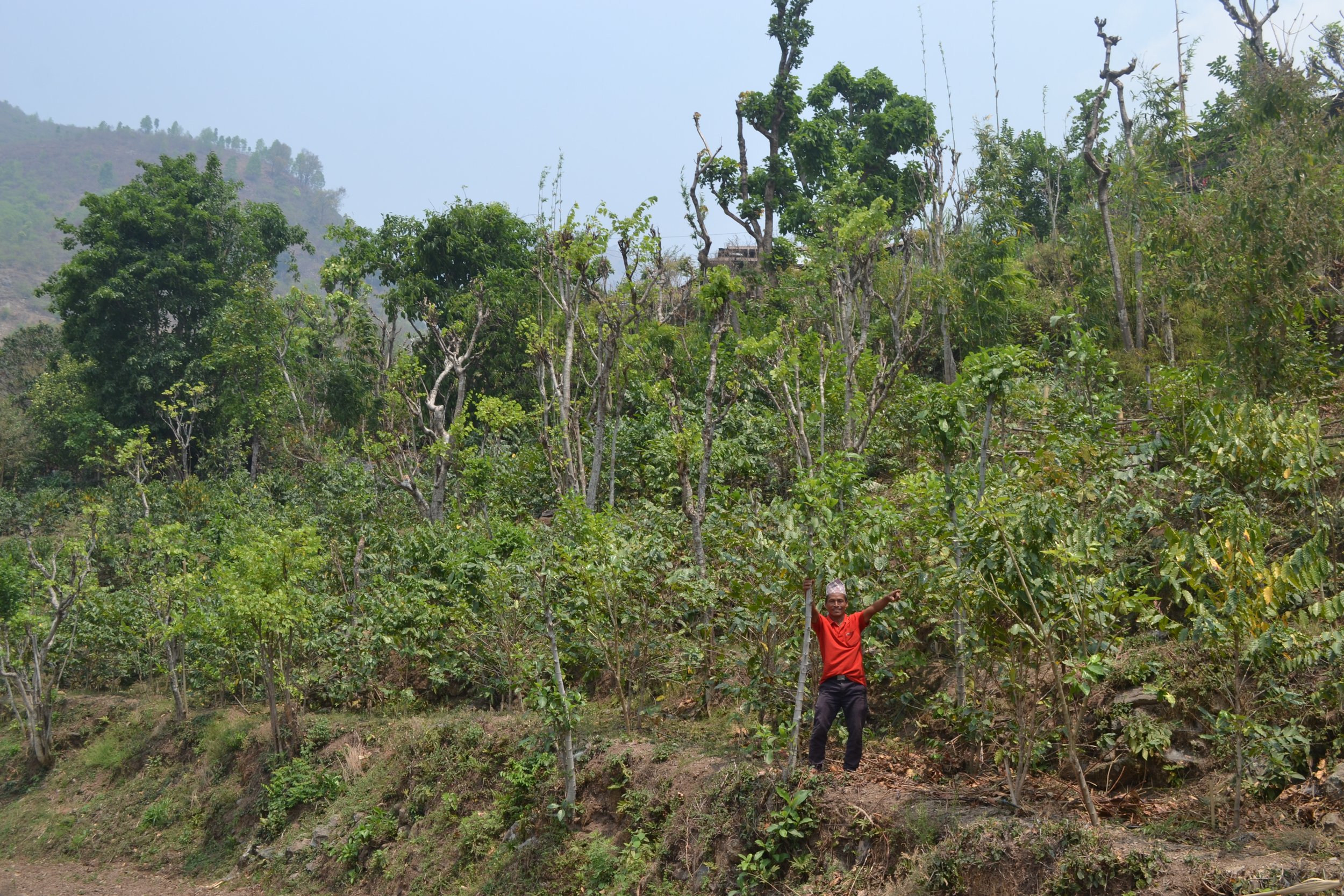
Coffee is more than a crop - it’s a climate-smart livelihood strategy. In Nawalparasi, farmers grow coffee using the organic “layer farming” method, intercropping with vegetables, fruits and shade trees. This approach:
Reduces soil erosion and regenerates degraded land
Requires less water than rice or cereal crops
Provides shade and cooling in a warming climate
Offers a reliable income from a high-value crop
Builds resilience to climate shocks and economic instability
Coffee trees bind the soil, improve biodiversity and create microclimates that benefit both people and ecosystems. As production grows, farmers are also learning to process, market and sell their coffee, turning adaptation into opportunity
The Story So Far (2019–2025)
Six years of steady growth, community leadership, and climate‑smart innovation. Across this period, our programmes have delivered a remarkable transformation.
Reaching more communities - 339 households across 11 villages are now actively engaged in organic coffee‑based agroforestry.
Coffee expansion - Over 36,000 coffee seedlings have been planted since 2019, with farmers increasingly running their own nurseries.
Rising production - Coffee parchment production has grown from 54.5 kg in 2020 to 910 kg in 2024 - a whopping sixteen‑fold increase.
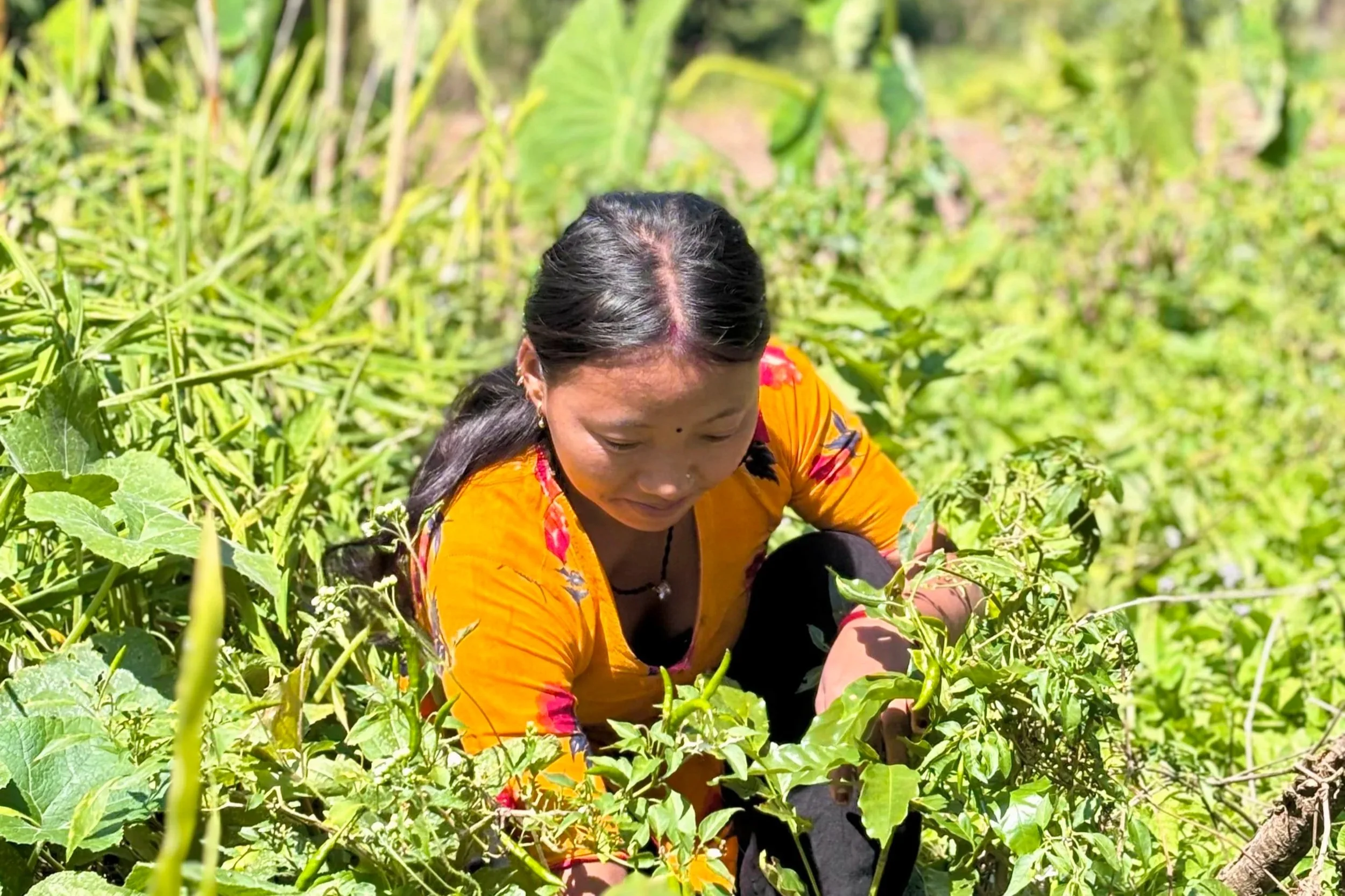
A thriving organic agroforestry system - Farmers now use the layer‑farming method, intercropping coffee with vegetables, fruits, legumes and fodder trees to improve soil, biodiversity and food security.
Training and knowledge sharing - Hundreds of farmers and students have taken part in training, on‑site coaching, and school engagement programmes.
Infrastructure and tools - The project has supported farmers with irrigation tanks, vegetable tunnels, pulping machines and drying racks, all delivered through cost‑sharing.
A growing market - Farmers now sell coffee to multiple buyers, with parchment prices rising from NPR 400/kg to NPR 500–600/kg as quality improves.
Current Project: From Surviving to Thriving (2026–2028)
The next phase - STTP - will deepen and expand the work across all eleven villages, scaling up a proven model. Key goals include:
Supporting 339 households with training, seedlings and equipment
Establishing 11 new nurseries and 7 pulping centres
Delivering school engagement programmes and small irrigation support
Strengthening market access through cooperatives and local partnerships
Promoting ecosystem‑based adaptation through agroforestry and layer farming
STTP builds on six years of progress, helping farmers scale up production, improve quality and secure better prices. It is a bold step toward long‑term resilience and a model for climate adaptation in Nepal’s mid‑hills.
This is not just a farming project - it’s a movement from surviving to thriving.