Farmer Field Schools underway in Deurali

Right now in Deurali across three villages, Dhabaha, Satakun and Durlunga, our NGO partners HICODEF are running farmer field schools. 93 farmers are now involved (44 men, 49 women), thirty more than last year. They are learning agriculture, water management and other climate change adaptation measures. Surbir Sthapit (HICODEF Director) sent us this outline of what is being learned as we move into spring.  

The classes run using participatory techniques as much as possible. The facilitator organizes games, singing, dancing etc to make the class interesting and lively.  After the class all the participants and facilitators visit demo plot to observe and carry out practical exercises such as nursery bed preparation, weeding, pest control etc. There are three technical agriculture apprentices in each location, who also attend the Farmer Field School classes. They have roles and responsibility to look after ten farmers each to apply the knowledge and skill in the farm in practical manner. The field schools are focusing on organic vegetable farming as much as possible. The farmers have gained knowledge and skill on modern agriculture techniques like polytunnel with mulching technology and use of sprinkle irrigation - a very adaptive method to climate change. Vegetables grow in the tunnel throughout the year, as it maintains optimal growing temperature.

We have been enabling climate change adaptation in Deurali for just over two years now, here are some of the outcomes in the latest project period:

  • A total of 9.38 hector land are used for vegetable farming; there was no practice of vegetable cultivation here before.
  • Between October 2017 and January 2018, 60,000 kg of vegetables have been produced.
  • In total farmers have earned 302,555 Nepali rupees from this production.
  • One farmer, Uttan Khachaha is the highest earner, with 58,400 Nepali rupees generated from sales in this period.
  • Not all vegetables produced are then sold. Since October, 11,000 kg of vegetable have been consumed by households in the project areas, improving diets and overall health.
Mrs Gopiram Rajali prepares her tomato crop for transportation to market. 

Mrs Gopiram Rajali prepares her tomato crop for transportation to market. 

Apprentice agricultural technician monitors tomato crop in Durlunga.  

Apprentice agricultural technician monitors tomato crop in Durlunga.  

Pipal Sara polytunnel farming in Sartakun. Each polytunnel costs £45 to construct, we want to provide five more for Deurali farmers in 2018.

Pipal Sara polytunnel farming in Sartakun. Each polytunnel costs £45 to construct, we want to provide five more for Deurali farmers in 2018.

The Glacier Trust provides funding for construction of rainwater harvesting in Deurali. As rainfall patterns change and the dry season extends, this simple technology is becoming increasingly important. 

The Glacier Trust provides funding for construction of rainwater harvesting in Deurali. As rainfall patterns change and the dry season extends, this simple technology is becoming increasingly important. 

Last minute adjustments to crate of Cauliflower before they are loaded in jeeps and transported to market. 

Last minute adjustments to crate of Cauliflower before they are loaded in jeeps and transported to market. 

How you can help

The adaptations we are enabling in Deurali are still in their early stages and demand for farmer field schools, farming equipment and water management is growing. 

Polytunnels cost around £45 and we want to provide five more of these to farmers in Deurali in 2018. A monthly donation of £3.75 will provide one Polytunnel. Simple but very effective. 

Learning to pulp coffee in Waku

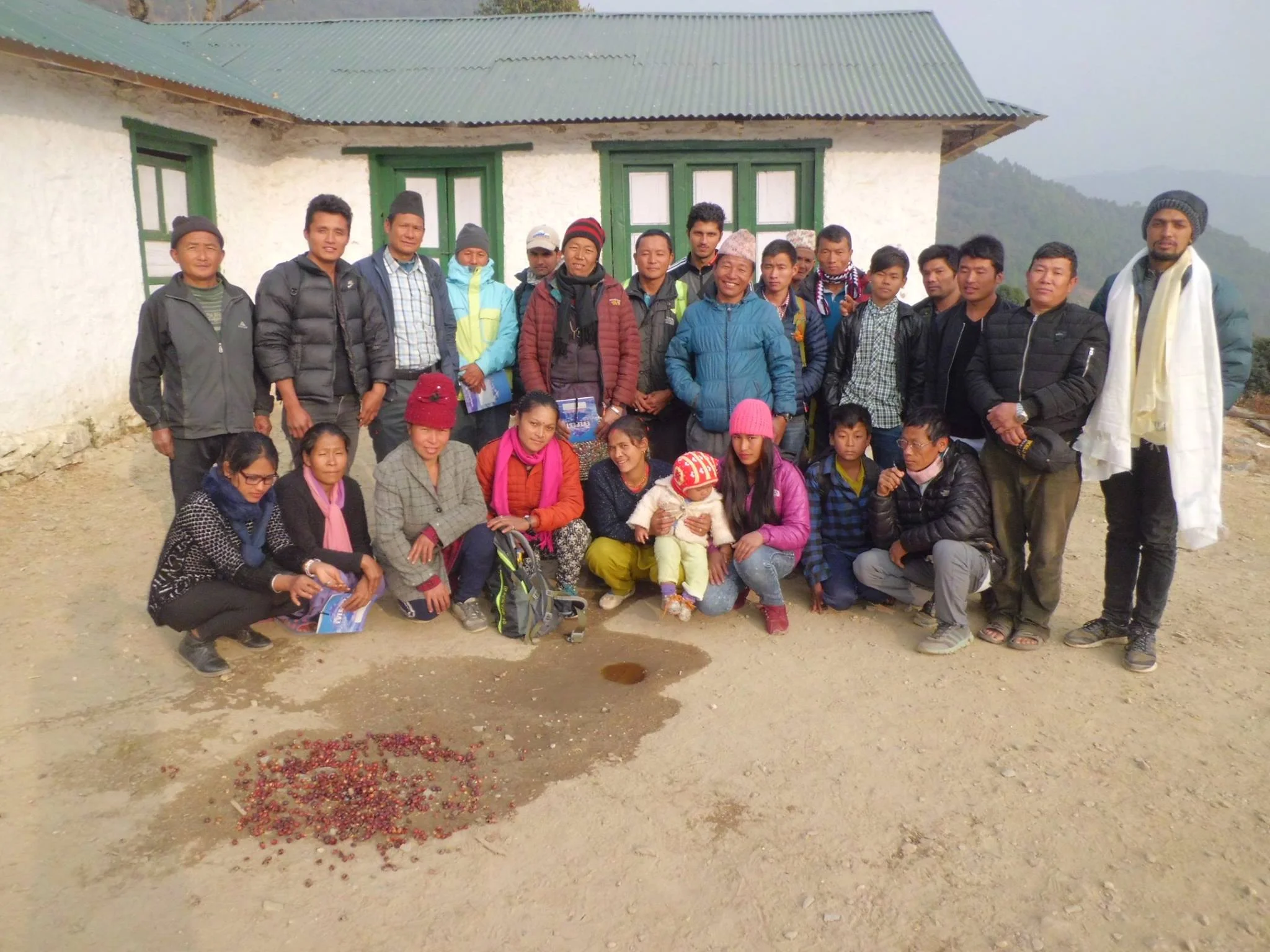
Following on from last week's coffee training in Deusa, Hari Kumar Kharki, our EcoHimal project officer has been in Waku to train 35 farmers on how to use a coffee pulping machine. He sent us these photos from his workshop on Wednesday:

Learning the importance of sifting out any dirt, foliage and unripe coffee cherries from the harvest. The red coffee cherries you can see here were picked the day before, the red fruity layer is actually very tasty to eat - a juicy, coffee flavoured…

Learning the importance of sifting out any dirt, foliage and unripe coffee cherries from the harvest. The red coffee cherries you can see here were picked the day before, the red fruity layer is actually very tasty to eat - a juicy, coffee flavoured snack. 

Next the coffee is fed into a hand turned pulping machine. The beans are stripped of their red fruity skin as they pass through the machine. This was the first time these farmers have ever used a pulping machine. It is easy to underestimate the…

Next the coffee is fed into a hand turned pulping machine. The beans are stripped of their red fruity skin as they pass through the machine. This was the first time these farmers have ever used a pulping machine.

It is easy to underestimate the difference the pulping machines have had. Previously farmers had to pulp by hand. This meant handling each bean individually, a tedious process of peeling the fruit off - one bean at a time. Thanks to these simple pulping machines, a job that used to take a whole afternoon, can now be done in a few minutes. 

After pulping, we are left with 'parchment', this is coffee that has had its skin removed, but still has a thin layer protecting the interior green coffee bean. The parchment is wet, so is left out to dry for a few days to lower its moisture content…

After pulping, we are left with 'parchment', this is coffee that has had its skin removed, but still has a thin layer protecting the interior green coffee bean. The parchment is wet, so is left out to dry for a few days to lower its moisture content. Once dry, the parchment has a hard shell, this protects the green coffee bean inside keeping it fresh for many months if necessary.

This parchment, once dry, will be carried in sacks to Deusa AFRC. Through our partners, EcoHimal, the coffee is then transported to Kathmandu to be sold to coffee traders. From there it will find its way to roasting houses in Australia and New Zealand.   

Hari Kumar Kharki (right of picture, wearing white ceremonial scarves) with farmers in Waku, January 31st 2018. 

Hari Kumar Kharki (right of picture, wearing white ceremonial scarves) with farmers in Waku, January 31st 2018. 

How you can help

The pulping machine seen here is one of six that your donations enabled us to buy in 2017. They are shared by farmers who carry them from hamlet to hamlet during the harvest season. They are hand turned, so no need for fuel or electricity and no CO2 emissions. They are also very sturdy and easy to maintain, the farmers love them.

As coffee growing spreads into Waku, we need to provide six more machines. Your donations are vital to this. Each pulping machine costs £360. Make a monthly donation of £30 to buy a coffee pulping machine for Waku.

Coffee harvest under way in Deusa

One of the most exciting developments in Deusa is the growth in coffee production on the lower slopes of the valley. Right now our volunteer, Meleah Moore, is in Deusa with our partners EcoHimal Nepal. There is a lot of activity going on there this week, farmers are getting specialist training on running cooperatives and learning some advanced skills to help them produce coffee more efficiently. The coffee training is practical, they need coffee beans, so it has been timed to coincide with the coffee harvest. Meleah is capturing this and posting updates on our Instagram account. 

Coffee is grown in the shade of other trees like Banana and Moringa, a process called intercropping that farmers are learning in Deusa and Waku thanks to our Agro Forestry education programmes there. The trees help each other, farmers are working with nature, rather than creating boring mono-culture farms that are not sustainable long term. The Banana tree provides vital shade for the coffee plants, but also, thanks to their roots help keep water in the soil. The roots of the coffee help bind the soil and their fallen, rotting leaves provide it with nutrients to keep the soil fertile.

The banana's are also of course delicious and nutritious, the coffee is unbelievable! Through the Deusa AFRC and our partners EcoHimal Nepal, the farmers are able to sell their coffee to traders in Kathmandu. This is providing a great new source of income. The Glacier Trust is currently exploring ways to roast, bag and sell coffee grown in Deusa ourselves. We'll buy it from the farmers, process it, sell it and then reinvest the profits into more Climate Change Adaptation projects. Please get in touch if you'd like to find out more. 

Deusa AFRC board members announced

DeusaAFRC.JPG

The Deusa AFRC (Agro Forestry Resource Centre) has elected a new chair and some new members to its board of governors. There is also a new look to the Advisory committee. Both bodies help to ensure that the AFRC runs in a democratic and transparent way with members of the board and advisory committee providing an essential link to the community. 

Newly Elected Board Members for two year tenure:

  1. Chairperson        Mr. Til Bahadur Rai        
  2. Vice Chair         Mr. Rajesh Babu Rai        
  3. Secretary        Mr. Keshab Prasad Rai        
  4. Joint-Secretary        Mr. Chudamani K.C.         
  5. Treasurer         Ms. Parbati Rai             
  6. Member            Mr. Solahang Rai         
  7. Member             Mr. Nau Bahadur Rai        
  8. Member             Ms. Poornima Rai         
  9. Member             Ms. Maina Kumari Rai     
  10. Member             Mr. Bir Bahadur B.K.     
  11. Member             Ms. Kamala Rai         

Advisory Committee members:

  1. Mr. Kul Krishna K.C. – Coordinator                
  2. Mr. Ram Sangharsha Kirati – Ward Chair - 8     
  3. Mr. Anu Prashanta Rai - Ward Chair -7         
  4. Mr. Bhojraj Karki – Journalist             
  5. Ms. Sarita Rai – Ward member

TGT would like to congratulate and welcome all new members. 

A dedicated home for project news.

In 2017 we ramped up the blog section of our website, bringing you news and views from the world of Climate Change adaptation and our activities here in the UK. As a consequence, the important news from our projects in Nepal was getting lost. We decided that it needs a dedicated section. So here it is, new for 2018: 'Project News'. 

We'll be sharing all the latest from our project work in Nepal right here to keep you up to date. 

IMG_3620.JPG